Product Description
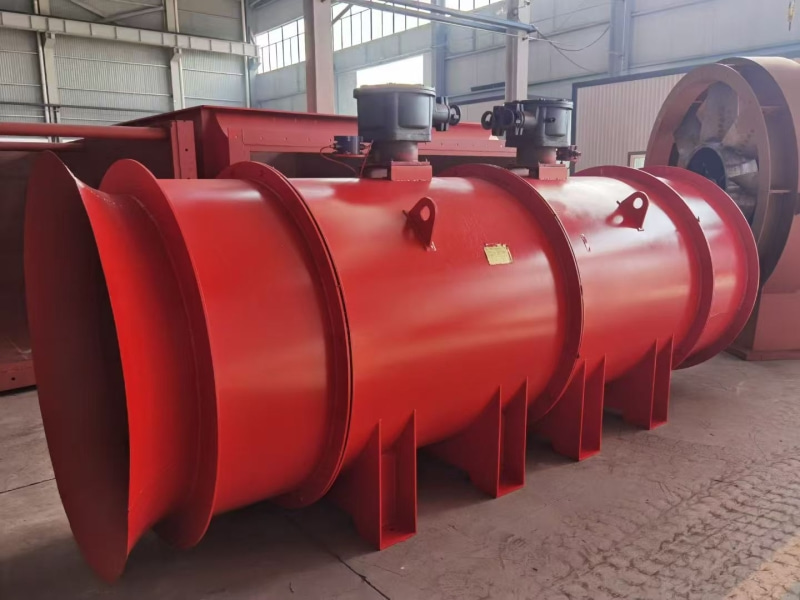
The 2×75kW tunnel construction axial flow fan is a high-efficiency and energy-saving device specifically designed for ventilation during tunnel excavation in highway, railway, hydropower, and subway engineering projects. This fan can be placed on the tunnel surface or supported on a bracket, and is widely applicable to forced ventilation operations in high-speed rail, highways, railways, water diversion tunnels, and metal mines.
Technical Advantages
1. High efficiency and energy saving, strong air pressure. The fan adopts the latest research results in aerospace technology from Northwestern Polytechnical University, using the optimal twist law design of dynamic and static blades, and introducing an advanced frequency conversion control system, featuring high efficiency, energy saving, low noise, and long air delivery distance.
2. Low noise operation, comprehensive noise reduction measures. Silencers are installed at both ends of the fan, filled with special waterproof sound-absorbing materials, effectively reducing operating noise.
3. Compact structure, safe and reliable. The body and structure are all welded from steel plates. The impeller uses streamlined airfoil blades, and the motor is directly connected to the impeller, ensuring reliable transmission. The overall structure is simple, compact, robust, durable, and easy to maintain.
FAQ
Q: What are the environmental requirements for the SDF-11.5 2×75kW fan?
A: The fan should transport non-corrosive air with a dust content ≤150mg/m³. The operating temperature should be -20℃~+40℃, relative humidity ≤90%, and the rated power frequency 50Hz/60HZ.
Q: What precautions should be taken during installation?
A: During installation, ensure the wind direction indicator on the fan aligns with the tunnel's ventilation direction and that the fan axis is parallel to the tunnel's centerline.
Q: What are the operational requirements for starting the fan?
A: Before starting, check for any foreign objects inside the fan, loose connecting bolts, and ensure the blade rotation direction matches the direction indicator.
Q: What should I do if the bearing temperature becomes too high during fan operation?
A: Overheating of the bearing is usually caused by three factors: bearing assembly precision issues, flue gas temperature fluctuations, and insufficient cooling water supply pressure.


