Unveiling the Powerhouse: The 300°C High-Temperature Industrial Fan
Introduction
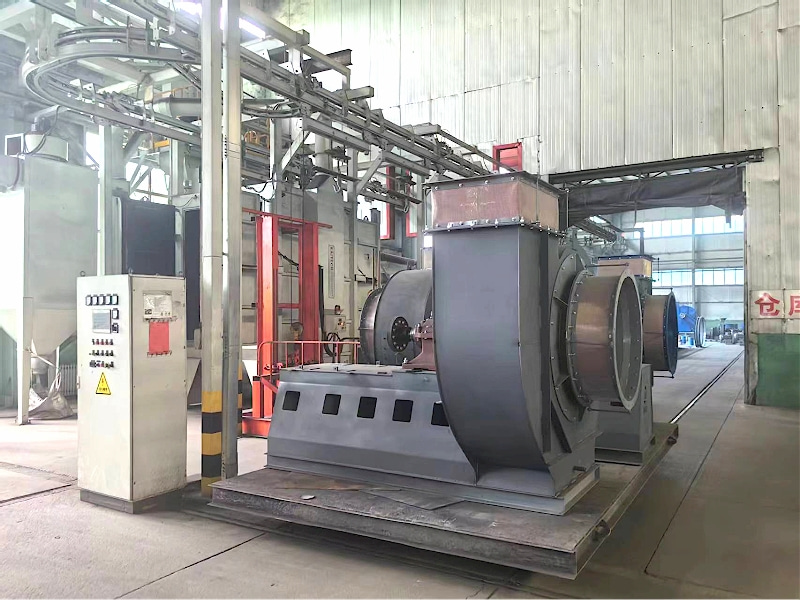
In demanding industrial environments where extreme heat is a the specialized 300°C High-Temperature Industrial Fan – an engineering marvel designed specifically to operate reliably in ambient temperatures soaring up to 300 degrees Celsius (572 degrees Fahrenheit). These robust fans are not merely adaptations of standard models; they represent a significant leap in material science, mechanical design, and thermal management, engineered from the ground up for unparalleled performance under thermal stress.
Key Applications
The ability to withstand sustained high temperatures opens up critical applications across diverse sectors:
- Industrial Furnaces & Kilns: Essential for circulating superheated air within furnaces (e.g., ceramic, metal heat treatment, glass) and kilns, ensuring uniform temperature distribution crucial for product quality and process efficiency.
- Drying & Curing Ovens: Providing powerful, reliable airflow in high-temperature drying and curing processes for paints, coatings, textiles, and composite materials.
- Power Generation: Supporting thermal management in boiler rooms, exhaust gas systems, and other high-heat areas within power plants.
- Chemical & Petrochemical Processing: Handling hot process gases, aiding in ventilation for high-heat reaction vessels, and supporting fume extraction where temperatures are elevated.
- Waste Incineration & Pyrolysis Plants: Operating reliably in the harsh environments associated with thermal waste treatment facilities.
- High-Temperature Testing Chambers: Providing precise airflow control within environmental test chambers simulating extreme heat conditions.
- Foundries: Ventilating hot casting areas and managing fumes.
Unmatched Advantages
Choosing a fan specifically engineered for 300°C operation delivers distinct, tangible benefits:
- Uncompromised Reliability: Constructed using specialized high-grade materials (e.g., heat-resistant alloys for impellers and casings, high-temperature lubricants, thermally stable insulation for motors) that resist thermal degradation, deformation, and premature failure.
- Enhanced Durability: Components are rigorously selected and tested to endure thermal cycling (repeated heating and cooling) without cracking or losing structural integrity, significantly extending operational lifespan compared to standard fans pushed3. Superior Performance Consistency: Maintains stable airflow and pressure characteristics even at sustained high temperatures, ensuring process stability and product quality. Advanced thermal designs often incorporate features like external motor cooling or air gap cooling systems.
- Robust Motor Protection: Motors are specifically designed or adapted with high-temperature insulation classes (e.g., Class H, F), specialized bearings, and often integrated cooling systems to prevent overheating and burnout.
- Reduced Downtime & Maintenance Costs: Engineered resilience translates directly into fewer unexpected failures, lower maintenance frequency, and reduced replacement costs, boosting overall operational efficiency.
- Safety Assurance: Built to stringent safety standards, mitigating risks associated with equipment failure in high-heat environments, such as fire hazards or process disruptions. Options often include ATEX certification for potentially explosive atmospheres.
Frequently Asked Questions (FAQ)
-
Q: How is a 300°C fan different from a standard industrial fan?
- A: The differences are fundamental. High-temperature fans utilize heat-resistant materials throughout (impeller, casing, shaft, bearings), specialized high-temp lubricants, motors with appropriate thermal insulation classes, and often incorporate specific cooling strategies for the motor. Standard fans lack these critical features and will rapidly deteriorate or fail under such conditions.
-
Q: What materials are typically used in these fans?
- A: Common materials include stainless steel alloys (e.g., 310S, 316L, 309S) known for their high-temperature strength and oxidation resistance. Impellers might be cast or fabricated from these alloys. Casings are often fabricated steel. Shafts are typically high-strength alloy steel. Critical is the selection based on the specific temperature and chemical environment.
-
Q: How is the motor protected from the extreme heat?
- A: Protection strategies include: using motors rated for high ambient temperatures (e.g., Class H insulation); employing external cooling fan on the motor; incorporating an air gap cooling system around the motor housing; or, in extreme cases, using a separate air source to cool the motor.
-
Q: What about lubrication at high temperatures?
- A: Standard greases break down. High-temperature fans use specialized synthetic lubricants specifically formulated to maintain viscosity and lubricating properties at temperatures exceeding 200°C, often up to 250°C or higher. Bearing design also plays a crucial role.
-
Q: Can these fans handle thermal cycling (heating and cooling cycles)?
- A: Yes, a core design principle fatigue. Materials are chosen for low thermal expansion coefficients or compatibility, and designs accommodate expansion/contraction to prevent stress cracking. This is a key advantage over standard fans.
-
Q: Are high-temperature fans noisy?
- A: Noise levels depend on the specific design, size, and operating point. However, manufacturers prioritize robust construction and balanced impellers, which often contribute to stable and potentially lower-noise operation compared to a standard fan struggling under thermal stress. Noise levels should be evaluated per specific model and application.
-
Q: What certifications are important?
- A: Beyond standard electrical safety certifications (e.g., CE, UL), ATEX certification is critical if the fan operates in potentially explosive atmospheres (common in chemical, petrochemical, paint booths). Specific industry certifications might also be required depending on the application sector.


