Flue Gas Recirculation (FGR) Fans: Enhancing Combustion Efficiency and Environmental Compliance
Introduction
Flue Gas Recirculation (FGR) is a critical technology employed in combustion systems to reduce Nitrogen Oxide (NOx) emissions—a major contributor to air pollution and regulatory non-compliance. At the heart of this system lies the Flue Gas Recirculation Fan, a specialized industrial fan designed to recirculate a portion of exhaust gases back into the combustion chamber. This process lowers peak flame temperatures and oxygen concentration, thereby suppressing NOx formation. FGR fans are engineered for high-temperature operation, corrosion resistance, and precise flow control, making them indispensable in modern emission control strategies.
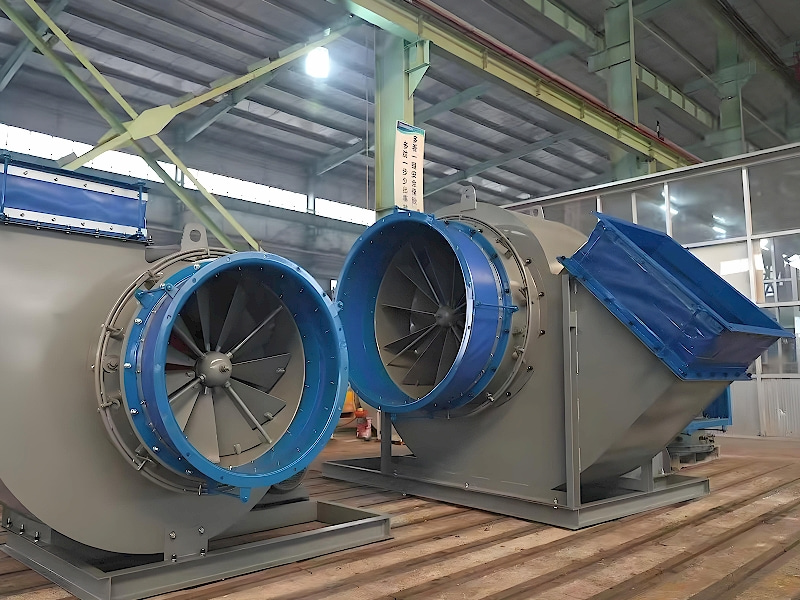
Key Applications
FGR fans are integral to systems across multiple industries:
- Power Generation: Gas turbines and boilers in thermal power plants.
- Industrial Processes: Refineries, chemical plants, and metallurgical furnaces.
- Waste Incineration: Facilities managing municipal or hazardous waste.
- Heating Systems: Large-scale commercial and district heating boilers.
By integrating FGR fans, facilities achieve compliance with stringent environmental regulations (e.g., EPA standards, EU Industrial Emissions Directive) while maintaining operational efficiency.
Advantages of Advanced FGR Fans
- Emission Reduction:
Capable of reducing NOx emissions by 30–60%, depending on system design and fuel type.
- Fuel Efficiency:
minimizing fuel waste.
- Operational Flexibility:
Compatible with natural gas, oil, coal, and biomass combustion systems.
- Durability:
Constructed with high-temperature alloys (e.g., Inconel) and protective coatings to withstand corrosive flue gases (SO₂, HCl).
- Smart Control Integration:
Supports IoT-enabled monitoring for real-time adjustments to recirculation ratios, enhancing responsiveness to load changes.
Technical Q&A
Q1: How does an FGR fan differ from a standard ID fan?
A: While both handle flue gases, FGR fans require specialized materials for high-temperature (up to and corrosive environments. They also demand precise flow modulation to maintain optimal recirculation rates without disrupting combustion stability.
Q2: What maintenance challenges are associated with FGR fans?
A: Particulate buildup and corrosion are primary concerns. Solutions include:
- Ceramic or thermal-sprayed coatings on impellers.
- Automated soot blowers.
- Predictive maintenance via vibration and temperature sensors.
Q3: Can FGR be retrofitted into existing systems?
A: Yes, though it requires:
- Aerodynamic recalibration of the combustion system.
- Integration with existing control architecture.
- Structural reinforcement to accommodate additional ducting and fan weight.


