Introduction
Forward curved centrifugal fans, characterized by their unique blade design where the curvature is oriented toward the direction of rotation, represent a specialized class of centrifugal fans. These fans operate on the principle of accelerating air radially outward via a rotating impeller (or wheel) composed of numerous short, forward-curved blades. The kinetic energy imparted to the air is then converted into pressure energy within the fan housing. Their distinct aerodynamic profile sets them apart from radial and backward curved centrifugal fans, offering specific delves into their applications, inherent benefits, and addresses common technical queries.
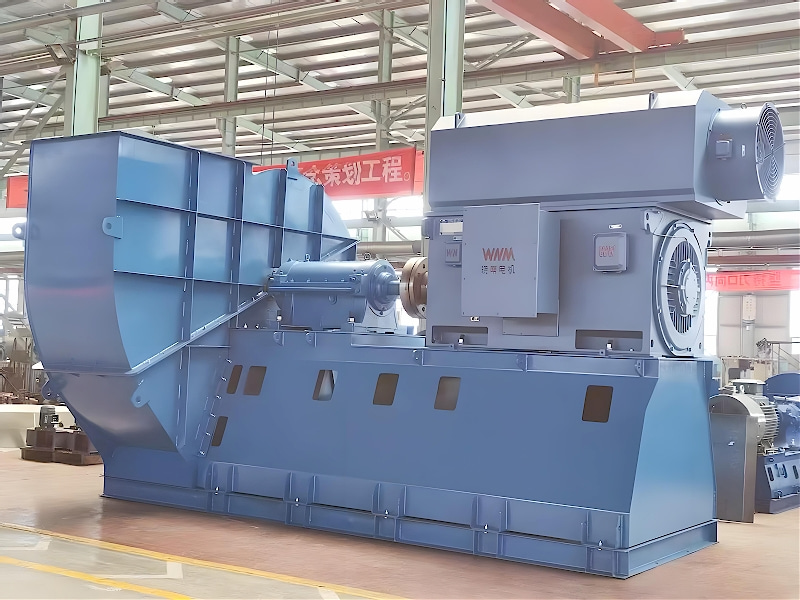
Primary Applications and Use Cases
Forward curved centrifugal fans find extensive utilization across diverse industries due to their specific performance characteristics:
- HVAC Systems: Predominantly used in residential, commercial, and institutional Heating, Ventilation, and Air Conditioning (HVAC) units. They are ideal for moving large volumes of air at relatively low to moderate static pressures, making them perfect for central air handling units, fan coil units, and packaged rooftop systems requiring efficient airflow for space conditioning and ventilation.
- Industrial Equipment: Employed in various industrial processes where moderate pressure development and high airflow are needed. Common applications include:
- Cooling for electronic enclosures, transformers, and machinery.
- Drying and curing processes in manufacturing.
- Light-duty exhaust systems and material conveying where high dust loads are not the primary concern.
- Air Purification and Filtration Units: Integrated into systems requiring air movement through filters (e.g., HEPA filters) or other purification media, benefiting from their ability to handle moderate system resistance effectively.
- Appliances: Found in domestic appliances such as clothes dryers and certain types of air purifiers.
Key Advantages of Forward Curved Centrifugal Fans
Several inherent design features contribute to the advantages of forward curved centrifugal fans in their target applications:
- ** Range of High Efficiency:** These fans often exhibit a relatively broad operating range near their point of peak efficiency. This characteristic provides operational flexibility and energy savings across varying system conditions compared to some fan types with narrower high-efficiency zones.
- Quiet Operation: The design, featuring a large number of short blades rotating at comparatively lower tip speeds than backward curved fans of similar capacity, contributes to lower noise generation. This makes them particularly suitable for noise-sensitive environments like offices, hospitals, and residential settings.
- Compact Design and High Airflow Capacity: Forward curved fans are capable of generating significant volumes of airflow within a compact physical envelope. This space efficiency is highly valuable in constrained equipment designs like rooftop units or fan coil units.
- Cost-Effectiveness: Generally, the manufacturing process for forward curved impellers can be simpler than for backward curved designs, potentially leading to lower initial costs, especially for high-volume production common in HVAC equipment.
- Effective at Moderate Pressures: While not suited for very high-pressure applications (where backward curved or radial fans excel), they perform exceptionally well in systems requiring moderate static pressure development combined with high airflow – the typical profile of many HVAC systems.
Frequently Asked Questions (FAQs)
Q1: What is the fundamental difference between forward curved and backward curved centrifugal fans?
- A: The key difference lies in the blade geometry and aerodynamic performance. Forward curved blades are shorter, curved towards the direction of rotation, and typically operate at lower tip speeds. They are optimized for high airflow volumes at low-to-moderate static pressures and are generally quieter. Backward curved blades are longer, curved away from the direction of rotation, operate at higher tip speeds, and are optimized for higher static pressure applications with high efficiency, often exhibiting a non-overloading power characteristic.
Q2: Are forward curved fans suitable for high-pressure industrial applications?
- A: Generally, no. Forward curved fans are not the optimal choice for applications requiring very high static pressures (e.g., heavyward curved or radial blade centrifugal fans are better suited for such demanding high-pressure scenarios due to their superior pressure development capabilities and often higher peak efficiencies under those conditions.
Q3: Why are forward curved fans common in HVAC equipment?
- A: Their advantages align perfectly with typical HVAC requirements: the ability to move large volumes of air efficiently at the low-to-moderate static pressures encountered in ducted systems, relatively quiet operation crucial for occupant comfort, compact size fitting within unit housings, and cost-effectiveness for mass-produced units.
Q4: What maintenance considerations are important for forward curved fans?
- A: Primary considerations include ensuring the fan wheel is clean and free of debris buildup (which can imbalance the wheel and reduce efficiency), checking and lubricating bearings according to manufacturer specifications, inspecting belts (if used) for tension and wear, and verifying that inlet and outlet conditions are unobstructed. Regular cleaning is especially important if the fan handles air with particulate matter.
Q5: How does the efficiency of a forward curved fan compare to other types?
- A: While backward curved fans often achieve higher peak efficiencies (potentially exceeding 85%), forward curved fans maintain good efficiency over a broader operating range near their best efficiency point. This makes them energy-efficient across a wider variety of operating conditions within their design pressure range, which is advantageous for systems with variable loads.
Q6: Can forward curved fans handle dirty or corrosive air streams?
- A: Standard forward curved fans are not specifically designed for highly abrasive or corrosive environments. The numerous small blades can be susceptible to erosion or corrosion damage. For such applications, specialized coatings, materials (like stainless steel), or alternative fan types (like radial fans with paddle wheels or heavy-duty backward curved designs) are recommended.


