Optimizing Combustion Efficiency: The Critical Role of Industrial Draft Fans
Introduction
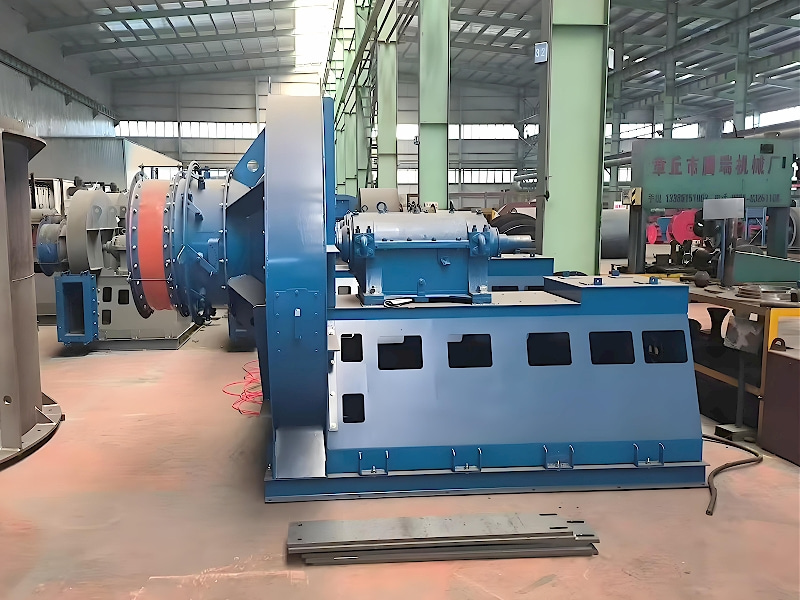
Industrial draft fans, commonly referred to as combustion air fans or forced draft (FD) fans, are engineered systems designed to deliver precise volumes of air to combustion processes. These serve as the backbone of efficient fuel combustion in industrial settings, ensuring optimal oxygen-to-fuel ratios. By leveraging advanced aerodynamics and robust materials, modern FD fans transcend basic ventilation, evolving into intelligent combustion management solutions.
Applications
FD fans are indispensable across multiple high-temperature industries:
- Power Generation: Ensure complete coal/pulverized fuel combustion in boilers, reducing unburned carbon and emissions.
- Metallurgy: Maintain precise oxygen levels in blast furnaces and kilns, enhancing metal purity and reducing slag.
- Chemical Processing: Enable controlled oxidation reactions in reactors while managing explosive gas mixtures.
- Waste-to-Energy: Optimize combustion of heterogeneous fuels in incinerators, maximizing energy recovery.
- Cement Production: Regulate calcination temperatures in rotary kilns, improving clinker quality.
Technical Advantages
1. Precision Airflow Control
Advanced variable frequency drives (VFDs) and IoT-enabled sensors allow ±2% airflow accuracy, adapting to real-time process demands. This eliminates manual damper adjustments and reduces operator intervention.
2. Energy Efficiency
- Aerodynamic Optimization: CFD-designed impellers reduce turbulence losses by 18-25% compared to conventional designs.
- Smart Load Matching: Dynamic pressure management cuts power consumption by 30-45% during partial-load operations.
- Stoichiometric Optimization: Maintains 3-5% excess oxygen levels, improving thermal efficiency by 12-18%.
- Emissions Reduction: Complete combustion lowers CO by 95% and particulate matter by 40% (EPA-compliant).
4. Reliability Engineering
- Thermal-Resistant Alloys: Stainless steel 310S/AISI 446 impellers withstand 1,100°C air temperatures.
- Predictive Maintenance: Vibration sensors and AI analytics predict bearing failures 200 operating hours in advance.
Technical Q&A
Q: How do FD fans differ from induced draft (ID) fans?
A: While FD fans supply combustion air, ID fans extract flue gases. Modern plants integrate both with balanced draft systems using distributed control systems (DCS) for precise furnace pressure regulation (±0.1 kPa).
Q: What materials ensure durability in high-temperature applications?
A: Critical components utilize:
- Impellers: Centrifugally cast Ni-Resist D5S (ASTM A297)
- Casings: Insulated carbon steel with ceramic fiber lining (1,200°C rating)
- Shafts: AISI 4140 with boron nitride coating
Q: Can FD fans handle corrosive environments?
A: Yes, through:
- Composite Coatings: HVOF-sprayed WC-10Co4Cr (ISO 14923 compliant)
- Cathodic Protection: Sacrificial anodes for wet corrosion control
- Air Filtration: HEPA pre-filters removing 99.97% of particulates
Q: What control protocols are supported?
A: Native integration with:
- Industrial IoT: MODBUS RTU/TCP, PROFIBUS DP
- Process Automation: DCS interfaces via OPC UA
- Cloud Analytics: REST API for Azure IoT/Predix compatibility


