High-Temperature Induced Draft Fans: Essential Solutions for Industrial Ventilation and Exhaust Systems
Introduction
High-temperature induced draft (ID) fans represent critical components in industrial systems requiring robust ventilation under extreme thermal conditions. Engineered to withstand operational temperatures exceeding facilitate controlled airflow, exhaust management, and pressure regulation in high-heat environments. Unlike standard industrial fans, high-temperature ID fans incorporate advanced materials such as heat-resistant alloys (e.g., stainless steel A286, Inconel), specialized cooling systems, and thermal expansion compensation mechanisms. This ensures structural integrity and consistent performance where conventional equipment would fail, making them indispensable in sectors like metallurgy, power generation, cement production, and chemical processing.
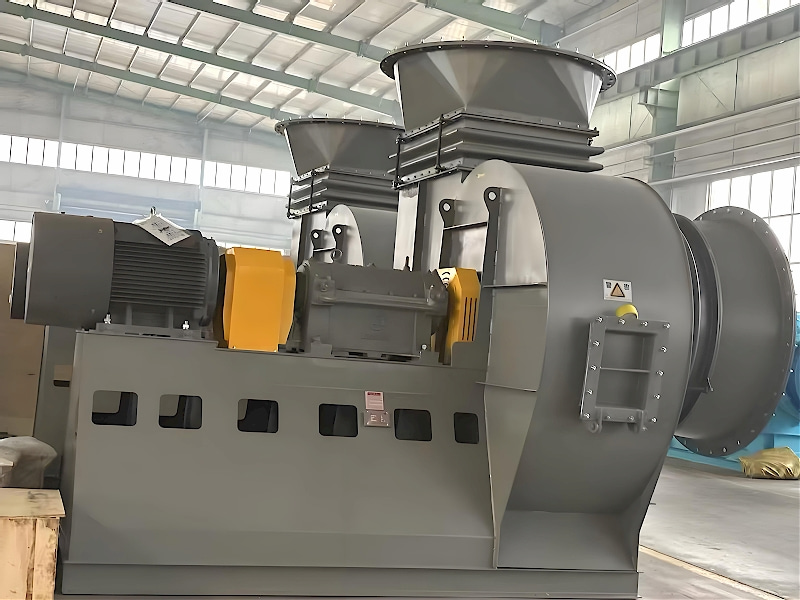
Key Applications & Critical Use Cases
High-temperature ID fans serve vital roles across multiple heavy industries:
- Power Generation Plants:
- Manage flue gas exhaust from boilers and furnaces at thermal power stations.
- Maintain negative pressure in combustion chambers, optimizing fuel efficiency and ensuring complete combustion.
- Handle corrosive gases (e.g., SO₂, NOₓ) in scrubber systems while enduring thermal stress.
- Metallurgical Processes:
- Extract fumes and particulate matter from electric arc furnaces (EAF), ladle furnaces, and sintering plants.
- Provide cooling airflow in coke oven gas (COG) recovery systems.
- Operate reliably in continuous casting and reheating furnace environments.
- Cement & Lime Manufacturing:
- Ventilate preheaters and kilns, handling calcined materials at >1000°C.
- Exhaust high-dust-load gases from clinker coolers while resisting abrasion.
- Enable energy recovery via waste heat boilers by maintaining precise gas flow.
- Chemical & Petrochemical Industries:
- Vent high-heat reaction gases in catalytic crackers and reformers.
- Support emission control systems in incinerators for hazardous waste treatment.
- Operate in pyrolysis units for carbon black or syngas production.
Technical Q&A: Addressing Key Considerations
Q1: What materials ensure durability in high-temperature ID fans?
A: Critical components like impellers, shafts, and casings utilize:
- Impellers: Cast or fabricated from heat-resistant steels (e.g., AISI 310S, DIN 1.4848) or nickel-based superalloys (Inconel 625/718) for creep resistance.
- Shafts: Forged from high-chromium steels (e.g., AISI 431) with integral cooling bores or external cooling jackets.
- Casings: Constructed with carbon steel inner liners + ceramic-fiber insulation or double-walled designs with air-cooling channels.
Q2: How do these fans manage thermal expansion?
A: Key design strategies include:
- **Expansion.
- Asymmetric Impeller Geometry: Compensates for differential expansion.
- Dynamic Sealing: Labyrinth seals with thermal clearance allowances.
- Support Systems: Free-sliding base frames or spring-mounted pedestals.
Q3: What cooling methods protect bearings and drives?
A: Advanced thermal management techniques:
- Air-Cooled Housings: External fins or forced-air blowers.
- Water-Cooled Bearings: Jacketed bearing housings with recirculating cooling water.
- Remote Motor Mounting: Drive motors positioned away from heat zones via extended shafts.
- **Thermal Barriersenums between hot gas streams and critical components.
Q4: Can high-temperature ID fans integrate with smart systems?
A: Yes. Modern designs feature:
- IIoT Sensors: Embedded thermocouples, vibration monitors, and strain gauges.
- Variable Frequency Drives (VFDs): Enable real-time airflow adjustments via PLC/DCS control.
- Predictive Maintenance AI: Algorithms analyzing temperature trends and mechanical stress for failure forecasting.
Q5: What efficiency optimizations are available?
A: Performance enhancements include:
- Aerodynamic Profiling: CFD-optimized blades for reduced turbulence.
-** Heat recovery from exhaust streams.
- Coating Technologies: Thermal-sprayed ceramic coatings (e.g., Al₂O₃-ZrO₂) to minimize heat transfer to structural parts.


