

2026-04-18
High-temperature fans represent a specialized category of industrial ventilation equipment engineered to operate reliably in environments exceeding standard thermal thresholds. Unlike conventional fans, these systems incorporate advanced materials (such as heat-resistant alloys, ceramic coatings, and specialized seals) and innovative thermal management designs to withstand continuous exposure to temperatures often ranging from 200°C to 850°C (392°F to 1562°F). Their construction prioritizes mechanical integrity under thermal stress, minimizing deformation and maintaining critical clearances. This engineering excellence ensures sustained aerodynamic performance and operational safety where ordinary fans would fail catastrophically, making them indispensable assets in high-heat industrial processes.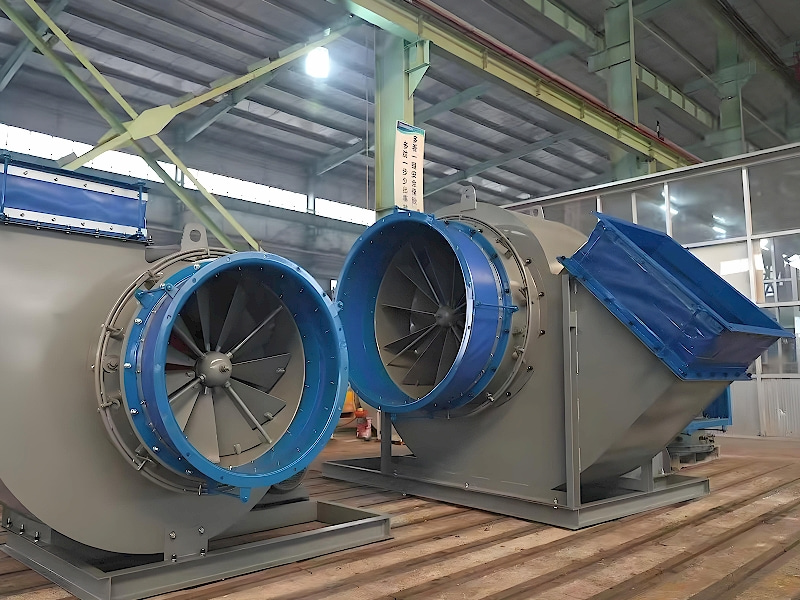
High-temperature fans serve as critical components in processes demanding robust heat management:
Q1: What defines a 'high-temperature' fan? A: While definitions vary, high-temperature fans are typically designed for continuous operation in ambient air streams exceeding 150°F), with many industrial models rated for 250°C to 500°C+ (482°F to 932°F+). The classification depends on the specific materials, bearing cooling systems, and motor protection employed.
Q2: What materials are critical for construction? A: Key components utilize specialized alloys like stainless steel (304/316 for moderate temps, 310S for higher temps), Inconel, or high-nickel alloys for severe conditions. Impellers might feature reinforced designs or coatings. Seals often use high-temperature silicones or graphite. Bearings require advanced lubrication systems or external cooling.
**Q3: How * *Extended Shafts / Belt Drives:* Physically distancing the motor from the heat source. * Cooling Jackets: Circulating coolant around the motor housing. * Thermally Protected Motors: Built-in thermal sensors and insulation class (e.g., Class H, 180°C). * Air Purge Systems: Introducing cool, clean air around the motor.
Q4: What are centrifugal vs. axial designs suitable for? A: Centrifugal fans excel in high-pressure applications common in industrial processes (e.g., overcoming system resistance in ductwork, baghouses). TheyAxial fans** are suitable for high-volume, lower-pressure scenarios like direct exhaust or large-space ventilation where space allows. Material choices remain critical for both in high-heat settings.
Q5: What maintenance considerations are unique? A: Regular inspection for thermal fatigue (cracks, warping), monitoring bearing temperatures and lubrication integrity, checking seal effectiveness, and ensuring cooling systems (if present) function correctly are paramount. Thermal cycling can accelerate wear.
Q6: How does thermal expansion affect design? A: Engineers meticulously calculate thermal expansion coefficients for all components. Designs incorporate allowances (e.g., specific clearances, flexible couplings, expansion joints) to prevent binding, distortion, or stress failures as the fan heats up during operation.
Q7: What about variable frequency drives (VFDs)? A: VFDs offer significant energy savings by matching fan speed to process demand. For high-temperature applications, VFDs must be rated for the environment or located remotely in a cooler area. Proper cabling and filters are essential to protect against electrical interference and heat.


