

2026-04-18
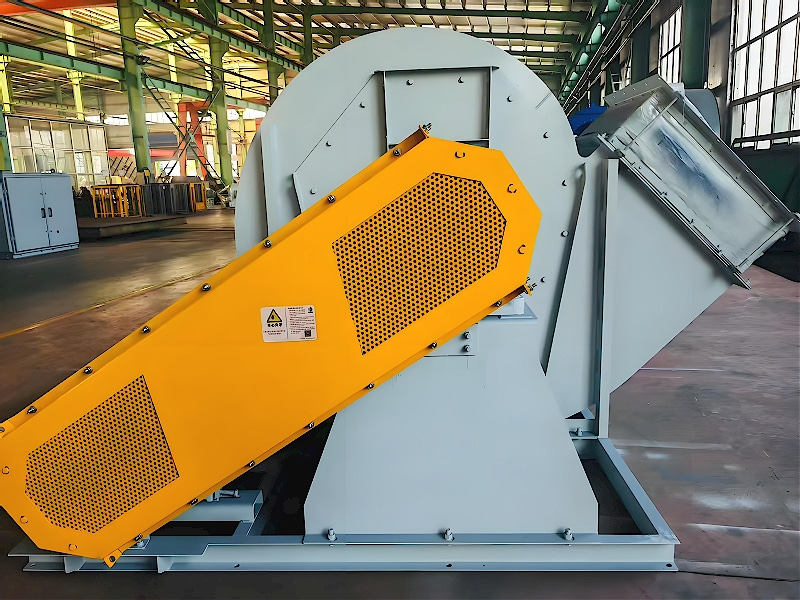
The Pickling Line Stainless Steel Fan is a high-performance ventilation device specifically designed for the highly corrosive exhaust gases generated during the pickling process. Pickling lines produce large amounts of acid mist and harmful gases. Without efficient extraction, these pollutants would severely contaminate the workshop environment and endanger the health of operating personnel. Manufactured from stainless steel grades such as 304 and 316L, this fan offers excellent corrosion resistance and can operate stably for extended periods in harsh, acid-mist-laden environments.
Typical applications include metal processing, electroplating pickling lines, PCB manufacturing, pharmaceutical and chemical industries, sewage deodorization, semiconductor processing, and any location where corrosive gases containing acids or alkalis are present. This fan is a core ventilation device in pickling sections, laboratories, electroplating plants, and other corrosive gas environments. It can also be used for general ventilation in factories, warehouses, office buildings, and similar facilities.
1. Superior Corrosion Resistance
The fan is manufactured from 304 or 316L stainless steel, resisting attack from acids, alkalis, salts, and other corrosive media. 316L stainless steel contains 2–3% molybdenum, offering excellent pitting resistance against chloride ions. It provides long-term stable operation in pickling processes, reducing replacement frequency. An optional FRP anti-corrosion lining can also be added to prevent chemical attack on the impeller and housing.
2. Robust Construction & Flexible Configuration
The fan mainly consists of an impeller, housing, air inlet, drive assembly, and motor. The impeller features backward-curved aerodynamic blades, dynamically balanced for smooth and efficient operation. The discharge angle can be customized from 0° to 315°. Drive methods include belt drive, shaft drive, or direct drive, adapting to site conditions. Inspection and cleaning ports are provided for routine checks.
3. High Efficiency, Energy Saving & Low Noise
Optimized impeller design, dynamic balancing, and volute structure improvements reduce airflow resistance and energy consumption. High-end models equipped with permanent magnet synchronous motors can save up to 35% energy compared to traditional induction motor fans. The fan also operates with low noise and vibration, improving the working environment.
4. Safe, Reliable & Long Service Life
Stainless steel offers high strength, wear resistance, and aging resistance, maintaining structural integrity even under high-speed operation or external impact. Impeller dynamic balance complies with ISO 1940 G2.5, and vibration meets ISO 2372. The housing is manufactured using a pre-injection integral molding process for excellent strength. Under normal conditions, the average service life exceeds 8 years.
5. Easy Maintenance
The housing is designed for easy disassembly and cleaning, allowing regular removal of corrosive deposits. Bearings, oil seals, and other wear parts require periodic replacement – normally, grease should be replaced every six months. It is recommended to check impeller balance, bearing lubrication, and seal wear every 3–6 months.
Q: How to select the right stainless steel fan for a pickling line?
Selection should focus on media characteristics (gas temperature, corrosiveness, dust content), performance parameters (airflow in m³/h, total pressure in Pa, motor power in kW), and installation environment. Airflow is typically calculated between 5,000–20,000 m³/h. Total pressure must account for duct resistance, generally 800–2,500 Pa. For material, 316L stainless steel is recommended for pickling processes because of its far superior resistance to chloride corrosion compared to 304. A protection rating of at least IP55 is advised. Motor power must match operating conditions to avoid oversizing or undersizing.
Q: What is the service life of a stainless steel fan for a pickling line?
Under normal use and maintenance, the average service life exceeds 8 years, and some high-quality products last even longer. However, pickling line fans often run 24/7 in harsh conditions involving corrosion, wear, and fouling. Regular maintenance is key to extending service life. A detailed maintenance plan should be established, including periodic replacement of wear parts and timely removal of accumulated dirt to prevent efficiency loss and failure.
Q: Stainless steel fan vs. FRP (fiberglass reinforced plastic) fan – which is better?
Both have advantages. Stainless steel fans offer high strength, wear resistance, and high-temperature resistance. 316L stainless steel is especially resistant to chloride corrosion, making it ideal for chloride-rich environments like pickling and desalination. FRP fans are lightweight, highly chemically resistant, electrically insulating, and lower in cost, but they have lower mechanical strength and temperature limits. For high-temperature, highly corrosive pickling lines, stainless steel is generally more robust and reliable.
Q: How can energy consumption be reduced for a pickling line fan?
Three approaches: 1) Choose a high-efficiency energy-saving model – permanent magnet synchronous motors can save about 35% energy compared to traditional induction motors. 2) Use variable frequency drive (VFD) control – precise control via PLC converts a fixed-speed fan into a variable-speed fan, ensuring exhaust meets emission standards while avoiding energy waste from excessive airflow. 3) Perform regular maintenance – clean impeller fouling promptly to prevent efficiency loss due to dirt buildup.
Q: What are common faults of pickling line fans and how to prevent them?
Common faults include mechanical wear (bearings, impeller), corrosion issues, motor failure, drive system problems, and abnormal vibration. Preventive measures include: regular inspection of bearing lubrication and impeller balance; anti-corrosion treatment of the fan interior; protecting the motor from moisture; cleaning filters regularly to prevent blockage; and stopping the fan for inspection immediately upon detecting severe vibration or abnormal noise. A detailed maintenance schedule should be established and a dedicated person assigned for management.


