Power Plant Exhaust Gas Fans: Critical Components for Clean and Efficient Operations
Introduction
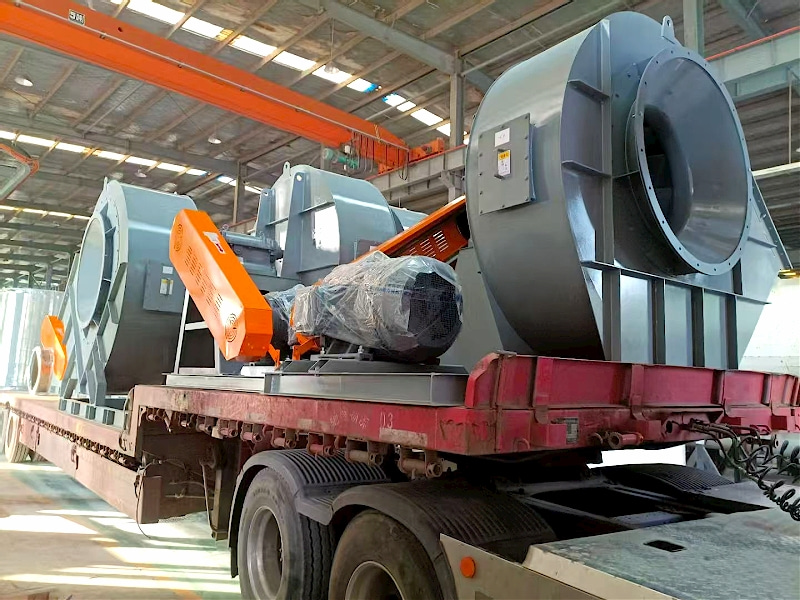
Power Plant Exhaust Gas Fans, often referred to as Induced Draft (ID) Fans or Boiler Exhaust Fans, are vital pieces of equipment engineered for the critical task of managing and transporting combustion gases and particulate matter (fly ash) generated within thermal power plants. These robust fans operate under demanding conditions of high temperatures, corrosive gases, and abrasive particulates. Their primary function is to create the necessary draft within the boiler system, ensuring the efficient flow of flue gases through pollution control devices (such as Electrostatic Precipitators - ESPs or Fabric Filters) and ultimately expelling them safely through the stack into the atmosphere. The reliable operation of these fans plant efficiency, meeting stringent environmental emission standards, and ensuring overall operational safety.
Key Applications and Uses
The deployment of Exhaust Gas Fans is essential across several critical stages in power plant operations:
- Boiler Draft Creation: Generating the negative pressure required to draw combustion gases through the boiler, superheaters, economizers, and air preheaters, ensuring complete combustion and optimal heat transfer.
- Particulate Matter Handling: Transporting fly ash-laden flue gases from the boiler exit through downstream particulate collection systems like ESPs or baghouses.
- Gas Scrubbing Support: Providing the motive force for flueGD) systems, where sulfur dioxide (SO₂) and other acid gases are removed.
- Stack Exhaust: Propelling the cleaned flue gases up the stack for dispersion into the atmosphere at sufficient height and velocity.
- System Balancing: Working in conjunction with Forced Draft (FD) fans to maintain the precise air-fuel ratio and pressure balance within the boiler for efficient combustion.
Distinct Advantages of Modern Exhaust Gas Fans
Investing in high-quality, well-designed exhaust gas fans offers significant operational benefits:
- Enhanced Energy Efficiency: Advanced aerodynamic designs, high-efficiency impellers, and optimized drive systems (potentially incorporating Variable Frequency Drives - VFDs) significantly reduce power consumption, a major operational cost factor. Modern fans can achieve efficiencies exceeding 85%.
- Superior Reliability and Longevity: Engineered for harsh environments using wear-resistant materials (like specialized coatings or hard-faced alloys for blades and casings) and robust construction, these fans minimize downtime due to erosion and corrosion, extending service life.
- Optimized Performance: Precise engineering ensures stable operation across varying load conditions, maintaining consistent draft and gas flow crucial for boiler efficiency and emission control system effectiveness.
- Reduced Maintenance Costs: Durable components and designs that facilitate easier inspection and maintenance access lead to lower lifecycle costs. Features like on-line blade washing systems can further reduce wear.
- Environmental Compliance: Reliable fan operation is fundamental to ensuring flue gases are effectively processed through emission control systems, enabling plants to consistently meet regulatory requirements for particulate matter and other pollutants.
- Operational Flexibility: Capable of handling variable gas volumes and temperatures, adapting to different fuel types and plant load demands.
Frequently Asked Questions (FAQs)
Q1: What are the primary factors contributing to wear in exhaust gas fans? A1: The main wear mechanisms are erosion caused by abrasive fly ash particles impacting fan components (especially blades and liners) and corrosion resulting from exposure gas condensates, particularly when burning fuels with sulfur content. High gas temperatures also accelerate degradation.
Q2: How does an exhaust gas fan differ from a standard industrial fan? A2: Exhaust gas fans are specialized units designed for extreme duty. They feature:
- Materials: Extensive use of abrasion-resistant steels, protective coatings (e.g., tungsten carbide overlays), and corrosion-resistant alloys.
- Design: Robust construction, often with extra heavy-duty bearings, reinforced shafts, and sometimes water-cooled bearings for high-temperature applications. Aerodynamic profiles are optimized for handling gas-particle mixtures.
- Performance: Built to deliverQ3: Why is fan efficiency so crucial in power plant applications? A3: ID fans are among the largest auxiliary power consumers in a thermal power plant. Even small percentage improvements in fan efficiency translate into substantial reductions in electricity consumption, leading to significant operational cost savings and a lower carbon footprint for the plant.
Q4: What role do Variable Frequency Drives (VFDs) play with exhaust gas fans? A4: VFDs allow precise control of the fan motor speed. Instead of throttling flow with dampers (which wastes energy), VFDs adjust the fan speed to match the exact system demand. This results in dramatic energy savings, especially during partial load operation, and provides smoother control.
Q5: How can maintenance requirements for exhaust gas fans be minimized? A5: Key strategies include selecting fans with wear-resistant materials and coatings from the outset, implementing robust predictive maintenance programs (vibration monitoring, thermography), utilizing on-line cleaning systems (e.g., air or water blasting), and ensuring proper system design to minimize unbalanced flow into the fan.


