Stainless Steel High-Temperature Fans: Engineered for Extreme Conditions
Introduction
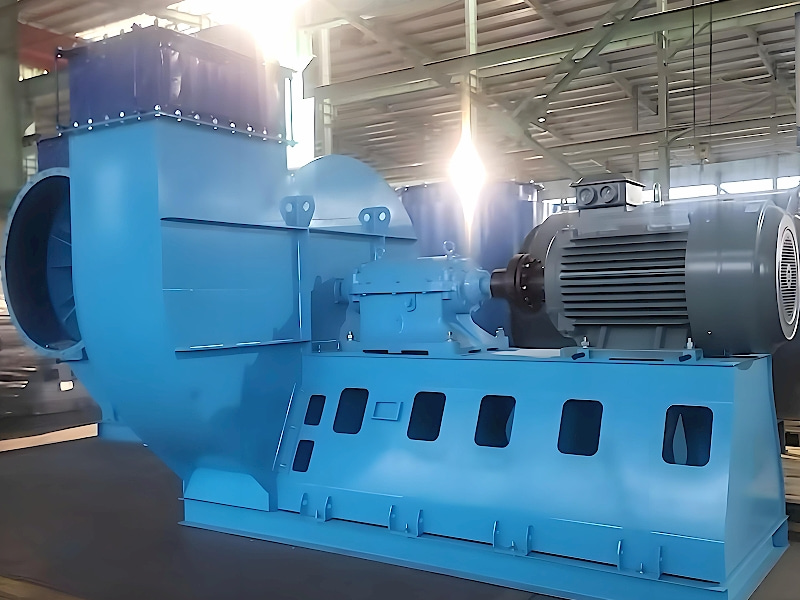
Stainless steel high-temperature fans represent a critical advancement in industrial air movement technology, specifically engineered to operate reliably in environments where conventional fans would fail. Constructed primarily from austenitic stainless steel grades (e.g., 304, 316L), these specialized fans excel in handling extremely hot, corrosive, or particulate-laden airstreams. Their robust design addresses the demanding requirements of modern industrial processes, offering unparalleled durability and performance where thermal stress and material degradation are primary concerns.
Key Applications
These fans serve indispensable roles across multiple high-heat industries:
- Metallurgical Processes: Essential for furnace cooling, heat treatment exhaust systems, and foundry operations where ambient temperatures routinely exceed 500°C (932elting, forging, and annealing.
- Chemical & Petrochemical Plants: Handle aggressive, high-temperature fumes containing corrosive chemicals, solvents, or acidic compounds in reactors, distillation columns, and VOC abatement systems.
- Power Generation: Facilitate critical airflow in boiler systems, flue gas recirculation (FGR), and thermal oxidizers within coal-fired, gas turbine, or biomass power plants.
- Glass & Ceramics Manufacturing: Provide controlled air supply and exhaust for kilns, lehrs, and tempering ovens, managing intense radiant heat and fine particulate matter.
- Food Processing & Drying: Used in high-temperature industrial ovens, dehydrators, and sterilization tunnels where sanitary stainless steel construction is mandatory.
- Environmental Control Systems: Integral to thermal oxidizers and afterburners in air pollution control, handling exhaust streams at temperatures often exceeding 800°C (1472°F).
Unmatched Advantages
Stainless steel high-temperature fans offer distinct operational and economic benefits:
- Exceptional Thermal Resistance: Engineered to withstand continuous operation at temperatures typically ranging from 400°C to 1000°C (752°F to 1832°F), depending on the specific stainless steel grade and fan design. They resist thermal deformation and maintain structural integrity.
- Superior Corrosion Resistance: The inherent properties of stainless steel (particularly grades like 316L with higher molybdenum content) provide excellent resistance to oxidation, acidic fumes, and corrosive particulates prevalent in harsh industrial environments, significantly extending service life.
- High Structural Integrity: Robust construction ensures dimensional stability under severe thermal cycling and mechanical stress, minimizing vibration and potential failure points compared to carbon steel alternatives.
- Low Maintenance Requirements: The corrosion-resistant nature reduces scaling, pitting, and general wear, leading to lower long-term maintenance costs and reduced downtime.
- Optimized Efficiency: Advanced aerodynamic designs for high-temperature applications ensure efficient airflow and pressure generation even with hot, less dense gases, contributing to energy savings.
- Long-Term Cost-Effectiveness: While the initial investment may be higher than standard fans, the extended lifespan, reduced maintenance, and reliable operation under extreme conditions result in a lower total cost of ownership (TCO).
Frequently Asked Questions (FAQ)
Q1: Why choose stainless steel specifically for high-temperature fans over other alloys? A1: Stainless steel offers an optimal balance of high-temperature strength, oxidation resistance, and corrosion resistance required for challenging industrial exhaust and process air applications. Its ability to form a protective chromium oxide for ultra-high temperatures (>1000°C), stainless steel (especially 309/310 grades or specific high-nickel alloys used in fans) provides the best combination of performance and cost-effectiveness for the majority of demanding industrial scenarios below 1000°C.
Q2: What is the typical operational lifespan of a stainless steel high-temperature fan in a harsh environment? A2: Lifespan varies significantly based on operating conditions (temperature profile, corrosiveness of the gas stream, particulate loading, maintenance practices). However, a well-designed and properly applied stainless steel high-temperature fan can reliably operate for 15-25 years or more in aggressive environments, substantially outperforming carbon steel alternatives which may fail within 5-10 years under similar stresses.
Q3: How critical is fan balancing for high-temperature operation? A3: Precision dynamic balancing is paramount. Thermal expansion can alter mass distribution. Imbalances at high rotational speeds lead to excessive vibration, accelerated bearing wear, structural fatigue, and potential catastrophic failure. High-quality stainless steel high-temperature fans undergo meticulous balancing at operating temperatures (hot balancing) to ensure smooth, reliable, and safe performance throughout their service life.
Q4: Can these fans be customized for specific process requirements? A4: Absolutely. Reputable manufacturers offer extensive customization options. This includes tailoring the fan size, blade design (backward curved, radial, or forward curved for specific pressure/flow needs), material grade selection (304, 316L, 310, Inconel® for extreme cases), shaft sealing solutions (labyrinth seals, purge systems), bearing types (high-temperature grease, oil bath, air-cooled), motor specifications (TEFC, explosion-proof), and protective coatings for extra corrosion resistance. Customization ensures optimal performance and longevity for unique applications.
Q5: What maintenance protocols are recommended? A5: While designed for low maintenance, regular protocols are essential. Key recommendations include:
- Vibration Monitoring: Implement continuous or periodic vibration analysis to detect imbalances.
- Thermal Inspections: Use infrared thermography during operation to identify hot spots indicating potential problems like bearing overheating or friction.
- Bearing Lubrication: Strict adherence to lubrication schedules using high-temperature greases specified by the manufacturer.
- Visual Checks: Regular inspection for signs of corrosion, material buildup on blades, structural cracks, or loose components.
- Cleaning: Removal of accumulated particulates from blades and housing (following safe shutdown and cooling procedures) to maintain efficiency and balance. Manufacturer-specific maintenance manuals provide detailed schedules and procedures.


