The Indispensable Role of Primary Air Fans in Power Plants: Efficiency and Reliability at the Core
Introduction
Primary Air Fans (PA Fans) serve as critical components within thermal power generation systems, particularly in pulverized coal-fired boilers. These high-pressure fans are engineered to deliver the precise air volume required for transporting pulverized coal from the mills to the furnace burners and supporting efficient combustion. Functioning as the backbone of the fuel delivery system, PA Fans directly influence combustion efficiency, operational stability, and overall plant performance. Their design and operational characteristics are paramount in achieving optimal boiler efficiency and minimizing emissions.
Key Applications and Purpose
The primary functions of PA Fans are multifaceted and essential to the. Pulverized Coal Transport: PA Fans generate the high-pressure air stream necessary to convey finely ground coal particles from the pulverizers (mills) through the coal pipes and into the furnace burners. This ensures a consistent and reliable fuel supply.
- Primary Air Supply for Combustion: They provide the 'primary air' – a portion of the combustion air introduced directly with the fuel stream through the burners. This air is vital for initial ignition, flame stability, and controlling the initial stages of the combustion reaction within the burner zone.
- Mill Drying and Operation: The hot primary air supplied by the PA Fan system is often, removing surface moisture. This drying process is crucial for efficient grinding, stable pneumatic transport, and complete combustion.
- Combustion Control: By modulating the flow and pressure of the primary air, operators can exert significant control over the combustion rate, flame shape, temperature distribution, and ultimately, boiler load.
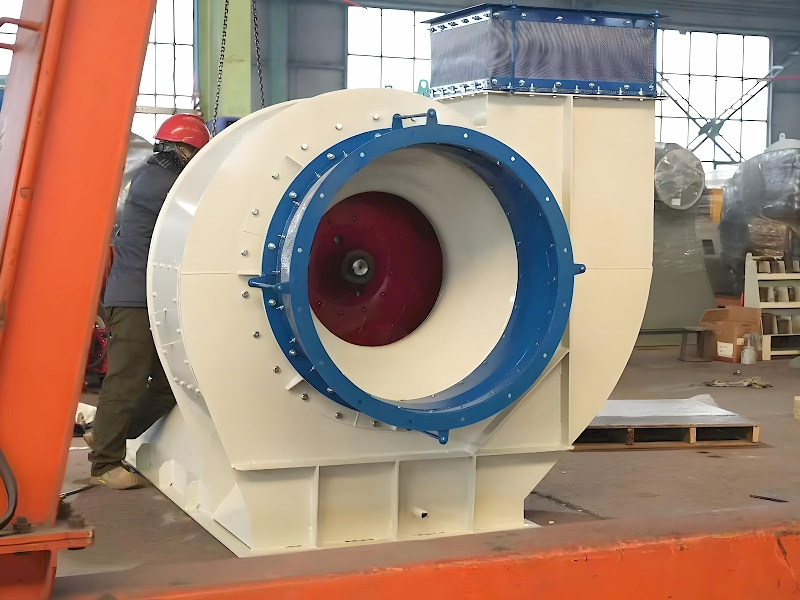
Advantages of Modern Primary Air Fan Systems
Contemporary PA Fan designs incorporate advanced features that deliver significant operational benefits:
- Enhanced Energy Efficiency: Modern PA Fans often utilize Variable Frequency Drives (VFDs) or inlet guide vane control. These technologies allow precise matching of fan output to the boiler's real-time demand, drastically reducing energy consumption compared to constant-speed fans with throttled outlets. Studies show potential energy savings of ~20-30% for large fans using VFDs.
- Superior Reliability and Durability: Robust construction using high-quality materials (wear-resistant alloys for blades, heavy-duty bearings) ensures longevity, even in the harsh environment of handling abrasive coal dust-laden air. Advanced sealing technologies minimize leakage and contamination.
- Optimized Combustion Performance: Precise control over primary air flow and pressure leads to more stable and efficient combustion. This translates to better fuel utilization, reduced unburned carbon losses, lower excess air requirements, and minimized emissions (NOx CO).
- Reduced Maintenance Costs: Improved designs focus on ease of maintenance, accessibility of critical components, and extended service intervals. Features like online vibration monitoring facilitate predictive maintenance, preventing unexpected failures.
- Operational Flexibility: Advanced control systems enable smooth and rapid response to load changes, allowing power plants to adapt quickly to grid demands without compromising combustion stability.
- Integration Capabilities: Modern PA Fans are designed to integrate seamlessly with Distributed Control Systems (DCS) and plant-wide optimization platforms, enabling centralized monitoring and control.
Frequently Asked Questions (FAQ)
Q1: What is the fundamental difference between a Primary Air (PA) Fan and a Forced Draft (FD) Fan? A1: While both supply combustion air, their roles are distinct. The PA Fan specifically handles the 'primary air' – the air used to transport pulverized coal and support initial combustion at the burner. The FD Fan supplies the bulk of the combustion air, known as 'secondary air', which is introduced around the burner or through separate air ports to complete the combustion process throughout the furnace volume. PA Fans typically operate at higher pressures than FD Fans due to the resistance of the coal piping system.
Q2: Why is precise control of Primary Air flow so critical? A2: Precise control is vital for several reasons:
- Fuel Transport: Insufficient air velocity can cause coal particles to drop out of suspension in the pipes, leading to plugging, uneven fuel distribution to burners, and potentially hazardous conditions. Excessive velocity increases pipe erosion and fan power consumption.
- Combustion Stability: The primary air-to-fuel ratio directly impacts ignition, flame stability, and burner performance. Incorrect ratios can cause flame lift-off, pulsations, inefficient burning, higher emissions, or even flameouts.
- Mill Operation: The correct primary air flow and temperature are essential for effective drying and grinding within the coal pulverizer.
Q3: What are common challenges faced with PA Fans, and how can they be mitigated? A3: Key challenges include:
- Erosion: Abrasive coal dust causes wear on fan blades, liners, and impellers. Mitigation involves using wear-resistant materials (hardfacing, ceramic coatings), optimizing flow paths to minimize particle impact angles, and ensuring proper particle size from the mill.
- Vibration: Imbalance, bearing wear, or structural resonance can cause vibration. Regular balancing, robust bearing design, condition monitoring (vibration analysis), and ensuring proper foundation stiffness are essential mitigation strategies.
- Control System Performance: Achieving stable and responsive control requires well-tuned control loops, accurate flow measurement devices (often impacted by dust), and reliable VFD or dam calibration and maintenance are crucial.
- High Power Consumption: As major auxiliary drives, PA Fans consume significant power. Mitigation primarily involves adopting high-efficiency motors and implementing VFDs for variable load operation.


